August Is Lying to You: The Seasonal Betting Trap That Wrecks Aussie Punters Every Spring
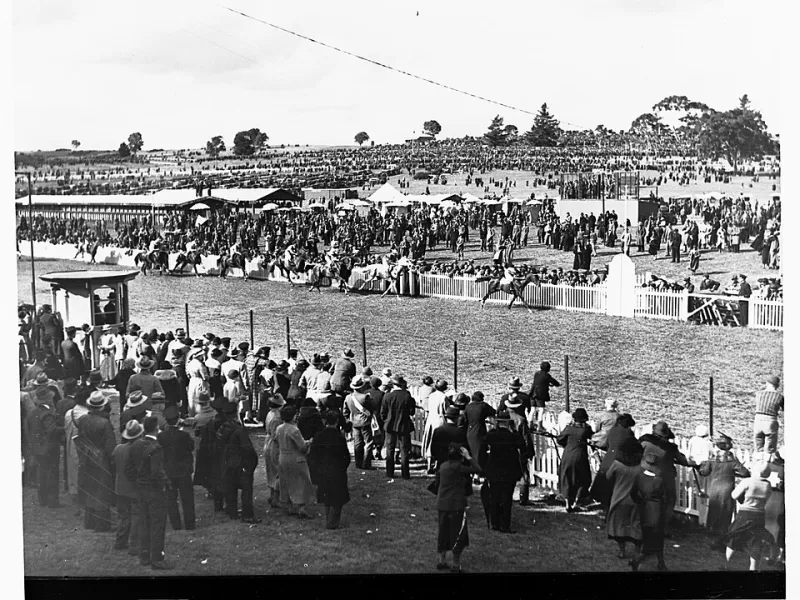
Photo: State Government Photographer, CC0, via Wikimedia Commons
Every year, like clockwork, something strange happens to Aussie punters in August. The markets are pumping. The racing calendar is stacked. The footy finals are dragging every armchair expert out of hibernation. And for a few glorious weeks, it genuinely feels like the money is flowing in one direction — yours.
Then September arrives. And for a disturbing number of punters, the whole thing unravels.
This isn't bad luck. It's a pattern. And once you see it, you can't unsee it.
The August Effect: Why the Calendar Pumps You Up
Let's be straight about what August actually is from a betting perspective: it's one of the most event-dense months on the Aussie sporting calendar. You've got NRL and AFL finals races heating up, TAB turnover spiking as spring racing carnival hype begins building, and punters who've been grinding through the quieter mid-winter months suddenly flush with confidence from a few solid months of results.
The racing calendar alone is enough to inflate any punter's sense of invincibility. Lead-up races to the spring carnival start attracting serious money. Markets get deep and liquid. Form guides feel more reliable. Everything seems to be clicking.
The problem? All that action creates a dangerous feedback loop. More bets placed means more wins — not because punters are suddenly sharper, but purely because volume is up. And human brains are notoriously terrible at separating frequency of wins from quality of wins.
What the Numbers Actually Show
If you track betting behaviour across Australian racing and sports markets, a consistent pattern emerges in the August-to-September window. Punters increase their average stake size by anywhere from 20 to 40 percent compared to their June and July averages. Bet frequency also climbs — sometimes dramatically — as the racing and footy calendars stack up simultaneously.
But here's the kicker: return on investment typically drops sharply by mid-September. The reasons are layered.
First, the spring carnival lead-up races attract a flood of recreational money. That sounds great in theory — softer competition, right? Except it also means bookmakers tighten their margins and adjust prices faster. The perceived edges punters spotted in August often evaporate by the time the serious carnival money hits.
Second, NRL and AFL finals betting is notoriously difficult for value hunters. The markets are the most efficient they'll be all year. Every man, woman, and their golden retriever has an opinion on the finals, which drives prices toward true probability faster than any other time on the calendar. The punter who found value in round 12 is suddenly fighting against the entire country's collective opinion.
Third — and this is the big one — punters enter September overextended. Bigger stakes, higher frequency, and a confidence level that the August results simply don't justify.
Overconfidence Isn't a Character Flaw — It's a Feature
It's worth being kind to yourself here, because what happens in August isn't stupidity. It's a completely predictable cognitive response to a run of positive reinforcement.
When you're winning — even if volume is doing most of the heavy lifting — your brain assigns that success to your own skill. Psychologists call it the self-serving attribution bias. Your wins are because you're good. Your losses are because of bad luck, a dodgy steward's decision, or that ridiculous call in the third quarter.
By the time August ends, many punters have mentally promoted themselves. They're no longer casual weekend punters — they're sharp operators who've cracked the code. And that mental promotion is exactly what the September markets are waiting to punish.
How Sharp Punters Use August as a Warning System
Here's the counter-intuitive move that separates the long-term survivors from the boom-and-bust crowd: the best punters treat August volatility as a caution signal, not a green light.
Practically, this means a few things.
Track your August ROI separately from your stake volume. If your profits are rising primarily because you're betting more, not because your strike rate or average odds have improved, that's a red flag. Volume masquerading as edge is one of the most dangerous illusions in punting.
Set a September reset point in August. Before the carnival hysteria kicks in, lock in your stake sizes and maximum weekly bet counts. Write them down. This sounds painfully boring, but it works. The punters who come out of spring racing with their bankrolls intact almost universally have some form of pre-committed limits in place before the madness starts.
Review your last two Septembers. Seriously, go back and look. If you're part of the majority, you'll find a pattern of elevated losses that correlates with an elevated August. That historical data is your best friend right now.
Watch for the confidence creep. If you find yourself thinking about increasing your usual stakes because you're 'in form,' stop and interrogate that thought. Is your form actually better? Or is August just doing what August always does?
The Spring Carnival Is Brilliant — Just Don't Let It Eat You
None of this is an argument against enjoying the spring racing carnival or the footy finals. These are genuinely great betting periods for punters who approach them with discipline. The markets are deep, the races are elite, and there's real entertainment value in having skin in the game.
The trap isn't the carnival itself. The trap is arriving at it overextended, overconfident, and under-prepared because August convinced you that you'd found something that was never really there.
The boom before the bust is real. But now that you know the pattern, you can choose a different story — one where August is the warm-up, not the peak, and September is where your preparation pays off rather than where your overconfidence gets collected by the bookies.
Boom loud, bet smart. The calendar doesn't have to own you.