Cashing Out on Top: The Aussie Punters Who Left the Table While They Were Still Winning

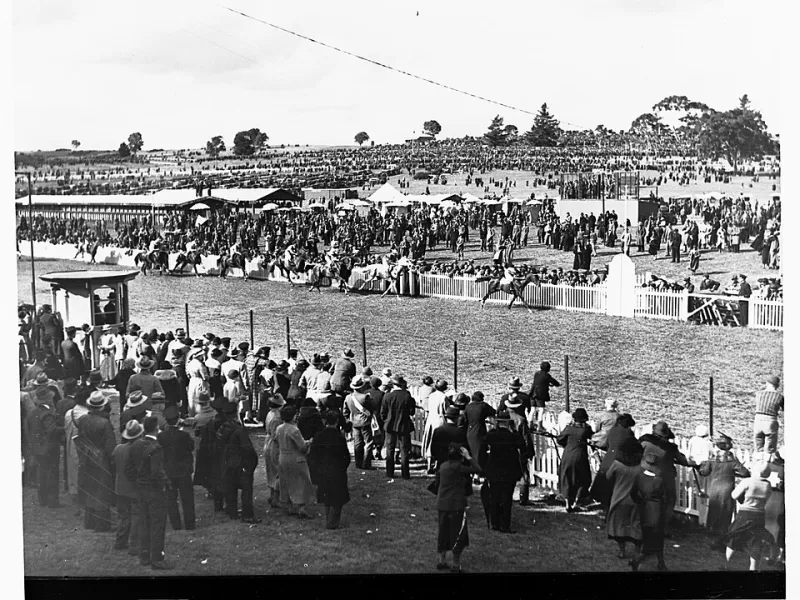
Photo: Jules Verne Times Two, CC BY-SA 4.0, via Wikimedia Commons
Most punting stories follow a familiar arc. You start small, you learn the game, you have a run, you push harder, and eventually the market reminds you that it doesn't owe you anything. The losses come, the bankroll shrinks, and you either grind your way back or you walk away with less than you started.
But there's a quieter group of Australian punters whose stories don't follow that script. These are the ones who left while they were still ahead — not because they hit a wall, but because they made a deliberate, eyes-open decision to exit the game at its peak. What made them do it? And what happened next?
The Decision That Makes No Sense on Paper
Meet Darren, a 41-year-old tradie from the Gold Coast who spent seven years developing what he describes as a genuinely profitable approach to NRL and racing markets. By his own calculation — backed by meticulous spreadsheets — he was averaging a 9.3 percent return on investment across a three-year period, betting roughly four to five times a week.
"I was making more from punting than I was from some of my slower work months," he says. "Not enough to retire on, but enough that it felt real."
Then, eighteen months into what was his most profitable run ever, Darren stopped. Cold.
"My wife thought I'd lost it. My mates thought I was mad. I'd just had my best month ever and I rang my TAB account and withdrew everything."
His reason wasn't a dramatic loss or a wake-up call. It was something more unsettling. "I realised I was starting to think about betting the way I used to think about drinking. It was the first thing I checked in the morning. I was planning holidays around race meetings. I wasn't losing. But I wasn't really present either."
When Winning Becomes Its Own Trap
Darren's experience isn't unique. Across Australia, there's a small but growing cohort of punters who've stepped back from profitable streaks and found that the decision felt less like quitting and more like surfacing for air.
Sophie, a 34-year-old teacher from Melbourne, had a different but equally deliberate exit story. She'd built a casino strategy around video poker variants over about two years, studying pay tables and playing only optimal games during promotional periods. By the time she walked away, she'd turned an initial $800 into just under $14,000 in net profit.
"People think that sounds like a reason to keep going," she laughs. "But I'd started to notice that I wasn't enjoying it anymore. It had become a second job. And I hadn't signed up for a second job."
Sophie's insight cuts to something that gets lost in most punting conversations: the psychological cost of sustained engagement isn't always visible in the bankroll. You can be profitable and exhausted simultaneously.
The Counter-Intuitive Psychology of Stopping
What's fascinating about these stories is the common thread running through the decision-making process. In almost every case, the punters who walked away voluntarily describe a moment of clarity that had nothing to do with their win-loss record.
For Darren, it was recognising behavioural changes in himself that preceded his previous worst periods — the obsessive checking, the mental space consumed by markets and form guides. "I'd been through a bad run three years earlier and I knew what the early warning signs looked like in myself. I saw those signs starting to appear again, even though the results were great. That scared me more than any losing streak."
For Sophie, it was a simpler calculation. "I asked myself: if I lost everything I'd made in the next six months, would I feel like those two years were worth it? And the honest answer was no. So why was I still going?"
This is the counter-intuitive heart of the matter. Most punting psychology focuses on how to manage losses. But the psychology of winning — particularly sustained winning — is rarely examined. Success creates its own distortions. The confidence it generates can mask early warning signs. The routine it establishes can harden into compulsion. The identity it builds — I'm someone who's good at this — can make stopping feel like a kind of personal failure even when it's anything but.
What They Found on the Other Side
Here's the part that surprises most people. Almost universally, the punters who walked away during winning streaks describe the aftermath not as loss but as relief.
"I had more mental space than I'd had in years," Darren says. "I didn't realise how much of my brain was being rented out until it wasn't anymore."
Sophie used her winnings to fund a trip to Japan she'd been putting off for three years. "That trip was worth more to me than anything I could have made in the next twelve months of grinding video poker. That's not a financial calculation. It's a life one."
Neither of them frames their decision as anti-gambling. Both say they enjoyed their time in the markets and don't regret the years they put in. The distinction they draw is between engagement that's intentional and engagement that's become automatic.
The Lesson That Doesn't Fit on a Bet Slip
What can the rest of us take from these stories? A few things worth sitting with.
Profitability is not the same as sustainability. You can be winning and still be in a relationship with betting that isn't serving you.
The best exit point is rarely obvious in the moment. Darren and Sophie both describe their decision as something they had to fight against their own instincts to make. Every instinct said keep going. The rational, self-aware part of them said otherwise.
And perhaps most importantly: knowing your number — not just your target profit, but your exit condition — before you're deep in a streak is infinitely easier than trying to find it in the heat of a run. Write it down. What would have to be true for you to walk away happy? The time to answer that question is now, not when the markets are singing your name.
The loudest wins aren't always the biggest ones. Sometimes the biggest win is knowing exactly when to go quiet.