Summer Carnival or Summer Carnage? How to Back Winners When the Racing World Comes to Australia

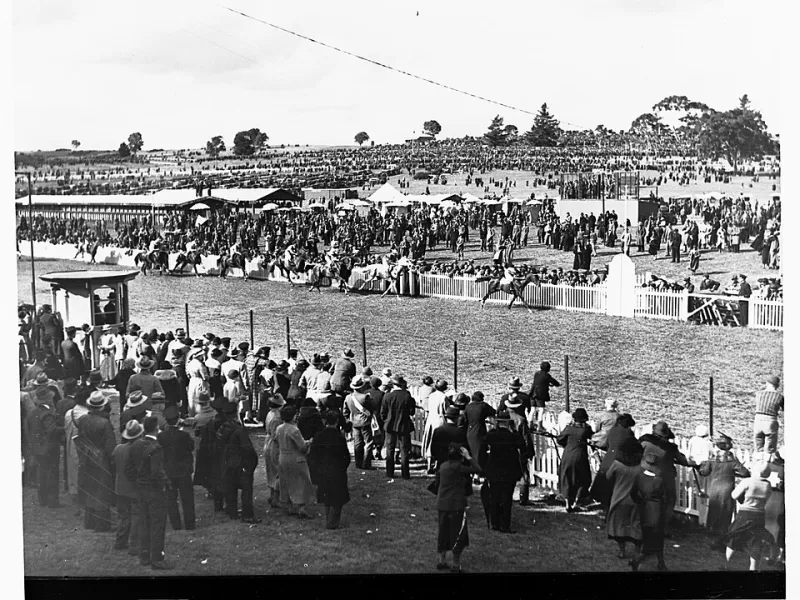
Photo: Unknown authorUnknown author, Public domain, via Wikimedia Commons
December rolls around, the Christmas lights go up, and somewhere between the backyard cricket and the second serving of pavlova, the Australian racing calendar hits its absolute peak. From the Sydney and Melbourne summer carnivals through to the Queensland and Perth equivalents, this is the time of year when the biggest prizemoney, the best horses, and the largest crowds all converge at once.
For punters, it's electric. It's also a minefield.
The same conditions that create massive betting opportunities during the summer carnival period also produce some of the most misleading form guides, the most unpredictable track conditions, and the most emotionally driven markets you'll find all year. Let's break down what's actually happening out there — and how to use it to your advantage.
Why the Summer Carnival Is Different From Everything Else
For most of the year, Australian racing runs on a relatively predictable cycle. You've got your established form lines, familiar track conditions, and a punting public that's fairly well calibrated to the markets. The carnival blows all of that up.
First, the fields get bigger and more international. Syndicates from Europe, Japan, Hong Kong, and the US ship horses into Australia specifically for the summer prizemoney, and those horses often come with limited local form to work from. When the bookies can't price them accurately, the markets get wider, the overlays get more frequent, and the sharp punters who've done their homework can find genuine value.
Second, the festive calendar means a completely different demographic is engaging with racing. Casual punters who bet once or twice a year turn up in huge numbers during December and January, and their money moves markets in ways that have nothing to do with actual form. When emotional, low-information money floods a market, prices get distorted — sometimes in your favour.
Third, the weather. Summer in Australia means heat, afternoon thunderstorms, and rapidly changing track conditions. A track rated Good 4 at barrier draw time can be a Heavy 9 by race time after a Brisbane afternoon storm. That kind of variability creates chaos for favourites trained on the assumption of firmer ground — and opportunity for punters watching the weather radar.
Reading the Track: Your Most Underrated Edge
Seriously, open the Bureau of Meteorology app alongside your racing form guide. It sounds obvious but most punters don't do it.
During the summer carnival, track condition management becomes one of the most valuable analytical tools available. Some horses are genuine wet trackers — their form on Heavy and Soft ground is dramatically better than their overall record suggests. Others are fragile in the wet, trained specifically for firm conditions, and will underperform badly when the going gets testing.
Trainers know this, and the smart ones will scratch their horses when conditions turn against them. But the market doesn't always price that risk in quickly enough. If you're watching the forecast and you see rain coming, check the fields for horses with strong dry track records and weak wet track records — those are your shortenable favourites.
Conversely, look for horses with strong Heavy and Soft form that are currently underrated in the market because their recent runs were on Good tracks. When the rain comes, these are your value plays.
The International Raider Problem (And the Opportunity Inside It)
Every summer carnival brings a fresh wave of international raiders, and every year the Australian punting public gets excited about them in ways that aren't always justified by the form.
Here's the reality: shipping a horse from Europe or Japan to Australia is an enormous logistical undertaking, and the travel stress, climate adjustment, and unfamiliar track surfaces mean that many international horses run below their true rating on first-up Australian starts. The ones that win on debut are genuinely exceptional — but the market often prices them as though all of them are.
The edge here is twofold. First, be selective about backing international raiders first-up. The hype can inflate their odds downward without justification. Second, look at international horses second-up in Australia — after they've had a run to acclimatise, they often represent much better value than their opening run suggested.
Japanese horses are a particular case study. They tend to run well fresh in Australian conditions, while European horses often need the run. Do your research on each raider's specific travel history before following the crowd.
Holiday Crowd Psychology and Market Distortion
The casual punter surge during the Christmas-New Year period is a genuine and exploitable market phenomenon. When tens of thousands of people who normally don't bet are putting money on horses because it's a public holiday and the family's watching the races on TV, the markets respond to sentiment rather than form.
Specifically, watch for:
Name-driven betting. Horses with catchy names, connections to celebrities, or heavy media coverage get backed by casual punters regardless of their actual form. This creates artificially short prices on horses that sharp punters wouldn't touch.
Favourite bias. Casual punters disproportionately back favourites, compressing the favourite's price and expanding the value on every other runner in the field. During the carnival, the second and third favourites often represent significantly better expected value than the market leader.
Late money spikes. The casual market tends to bet late, which means prices on media-friendly horses can drift early and then firm dramatically in the last fifteen minutes before the jump. If you're backing value plays, get on early in the carnival period before the holiday crowd moves the market.
Setting a Carnival Budget Before the First Race
The single biggest mistake Aussie punters make during the summer carnival isn't backing the wrong horse. It's backing too many horses across too many days without a defined budget.
The carnival runs for weeks. There are major races almost every weekend, with feature days scattered throughout. It is absolutely possible to have a profitable individual day and still end the carnival period down significantly because you overbet the quiet midweek cards in between.
Set a total carnival budget before the first major meeting. Divide it into weekly allocations. Track every bet. The festive atmosphere — the big crowds, the fashion, the prizemoney announcements — is designed to make you feel like money flows freely this time of year. It doesn't. Treat the carnival like a campaign, not a party.
The Punters Who Win the Carnival
They're not the ones with the best tips. They're the ones who show up prepared.
They've studied the international form. They're watching the weather. They're betting against the holiday crowd rather than with it. They've set their budget and they're sticking to it even when a race looks too good to miss.
The Australian summer racing carnival is the most exciting betting period on the calendar. At BoomBet AU, we think that's exactly why it deserves your most disciplined approach. Go in loud, go in confident — but go in smart.